

Great businesses have failed despite great products:
All three companies had strong brands, talented people, loyal customers, and successful products. Yet they still experienced major decline.
Why?
They did not fail because their products were poor. They failed because leadership, systems, and execution did not adapt quickly enough to a changing world. This is one of the most important lessons in business today. A great product can attract customers, but it cannot carry an entire organisation on its own.
Many business owners and leaders spend significant time improving their products and services. They focus on innovation, marketing, and customer acquisition. These areas are important, but they are only part of the picture. Long-term success depends on what happens behind the product. It depends on how people are led, how systems operate, and how consistently plans become action.
Understanding why businesses fail helps leaders identify weaknesses before they become serious problems. It also provides valuable lessons for managers, entrepreneurs, and professionals who want to improve their leadership skills.
A successful business is not built only on what it sells. It is built on the people, processes, and decisions that support what it sells.
Leadership is one of the strongest influences on business performance.
A leader’s decisions shape company culture, employee motivation, customer experience, and future direction. When leadership is effective, people understand the vision and work towards shared goals. When leadership is weak, confusion and uncertainty often follow.
One of the main reasons why businesses fail is that leaders focus too much on immediate problems and not enough on building a strong foundation for the future.
Great leaders provide clarity.
They help employees understand where the organisation is going, why it matters, and how their work contributes to success. Without a clear vision, employees may work hard but end up moving in different directions. Departments may create competing priorities. Important opportunities may be missed. A business can have the best product on the market, but without a clear direction, maintaining growth becomes difficult.
Leadership is not only about making decisions. It is about creating alignment.
Communication is the foundation of effective leadership.
Employees need clear expectations, honest feedback, and regular updates. Without communication, small issues can quickly become major challenges.
Poor communication can lead to:
Customers often experience the effects of internal leadership problems. When teams are not aligned, service becomes inconsistent and trust begins to decline.
Strong communication creates confidence. Weak communication creates uncertainty.
Markets change constantly. Customer needs evolve. Technology creates new opportunities and challenges. Leaders who refuse to adapt often place their organisations at risk.
Kodak is a powerful example.
The company was once one of the most recognised names in photography. Interestingly, Kodak engineers created one of the first digital cameras. However, the company struggled to move away from its traditional film business model. As competitors embraced digital technology, Kodak lost its market position.
The lesson is not that innovation is enough. The lesson is that leaders must be willing to act on innovation.
A business can identify change and still fail if leadership does not respond effectively.
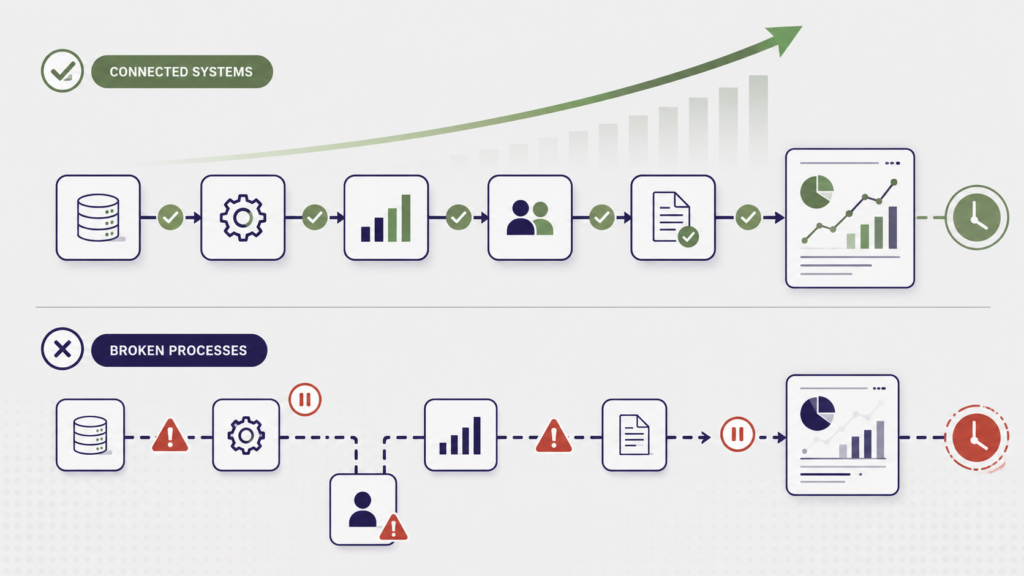
Behind every successful organisation are strong systems. Systems include processes, technology, communication channels, workflows, and standards that allow businesses to operate consistently. Many companies focus heavily on developing great products but overlook the systems needed to support growth. This creates problems as the business becomes larger.
A small business may succeed because of the energy and commitment of its founders. However, what works for a team of five people may not work for a team of fifty.
Without proper systems, businesses often experience:
Growth without structure can create chaos. Successful organisations understand that systems are not unnecessary rules. They are tools that help people perform better.
Customers do not only buy products. They buy experiences. They expect businesses to deliver the same level of quality every time. Imagine ordering from a company that provides excellent service one day but ignores customer concerns the next. Even if the product is excellent, customers may eventually choose another option.
Consistency builds trust. Weak systems often create inconsistent experiences, which can damage customer relationships.
Blockbuster: A Lesson in Changing Systems
Blockbuster was once one of the biggest entertainment companies in the world. Customers knew the brand. They visited stores regularly. The business model was successful.
However, customer behaviour changed.
Streaming technology created a new way for people to access entertainment. Netflix offered convenience and flexibility, while Blockbuster continued relying heavily on its traditional rental model.
Blockbuster did not fail because customers stopped enjoying movies. It failed because the systems supporting the business did not evolve with customer expectations.
A strong business system must support today’s success while preparing for tomorrow’s challenges.
Many businesses have excellent ideas. They create strategies, set goals, and develop plans. The challenge is turning those plans into consistent action.
Execution is where ideas become results. A business can have the best strategy in the industry, but without effective execution, the strategy has little value.
Many organisations know what they should do.
The problem is not knowledge; the problem is execution. Businesses fail when important actions are discussed but not completed.
Strong leaders create accountability. They ensure goals are followed through, and progress is measured.
Customers remember what businesses do, not what businesses promise. A company may advertise excellent service, but if customers repeatedly experience delays or poor support, trust disappears.
Consistency is what separates successful businesses from businesses that struggle.
WeWork became one of the most recognised companies in the shared workspace industry. The idea was attractive. The company created modern workplaces and built a strong global presence. However, rapid expansion created challenges around leadership, governance, and financial management. The company demonstrated that growth alone does not guarantee success.
Businesses need disciplined execution. They need strong decision-making, clear accountability, and systems that support sustainable growth.
Fast growth without strong foundations can create significant risks.
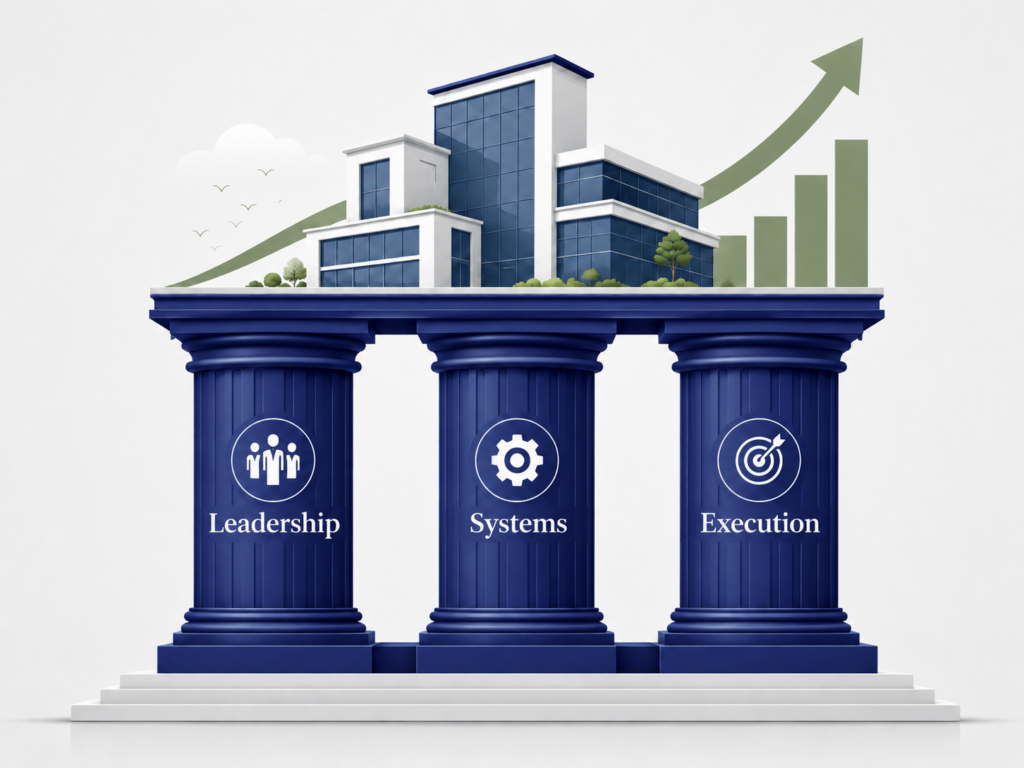
Successful organisations understand that long-term success depends on three connected areas.
Strong leadership creates direction.
Good leaders:
Leadership is not about having all the answers. It is about creating an environment where people can succeed.
Strong systems create stability.
Effective systems:
Systems provide the structure needed for success.
Strong execution creates results.
Effective execution requires:
A great strategy means nothing if it is not implemented.
Business coaching helps leaders identify challenges, improve decision making, and develop stronger habits. Many leaders become deeply involved in daily operations. This can make it difficult to see problems objectively.
A coach provides an outside perspective and helps leaders ask important questions:
Leadership development is a continuous journey. The strongest leaders understand that improving themselves improves their organisations.
The biggest lesson is simple.
A great product is valuable, but it is not enough.
Businesses succeed when they combine excellent products with:
Companies do not usually fail overnight. Failure often happens slowly through small decisions, missed opportunities, and ignored warning signs.
The good news is that these challenges can be addressed. Leaders can improve their communication. Businesses can strengthen their systems. Teams can become more accountable. Organisations can learn to adapt.
Success is not created by one great idea. It is created by consistently doing the right things well.
Understanding why businesses fail is essential for anyone who wants to build a successful organisation. Great products create opportunities, but leadership, systems, and execution determine whether those opportunities become lasting success.
Kodak, Blockbuster, and WeWork all provide valuable lessons. They show that having a strong product or a recognised brand does not guarantee survival.
The businesses that succeed are those that continue learning, adapting, and improving.
Take a moment to reflect on your own organisation or leadership journey.
What is one area that could become stronger: leadership, systems, or execution?
Sometimes the greatest improvements do not come from creating something completely new. They come from strengthening the foundations that already exist.