
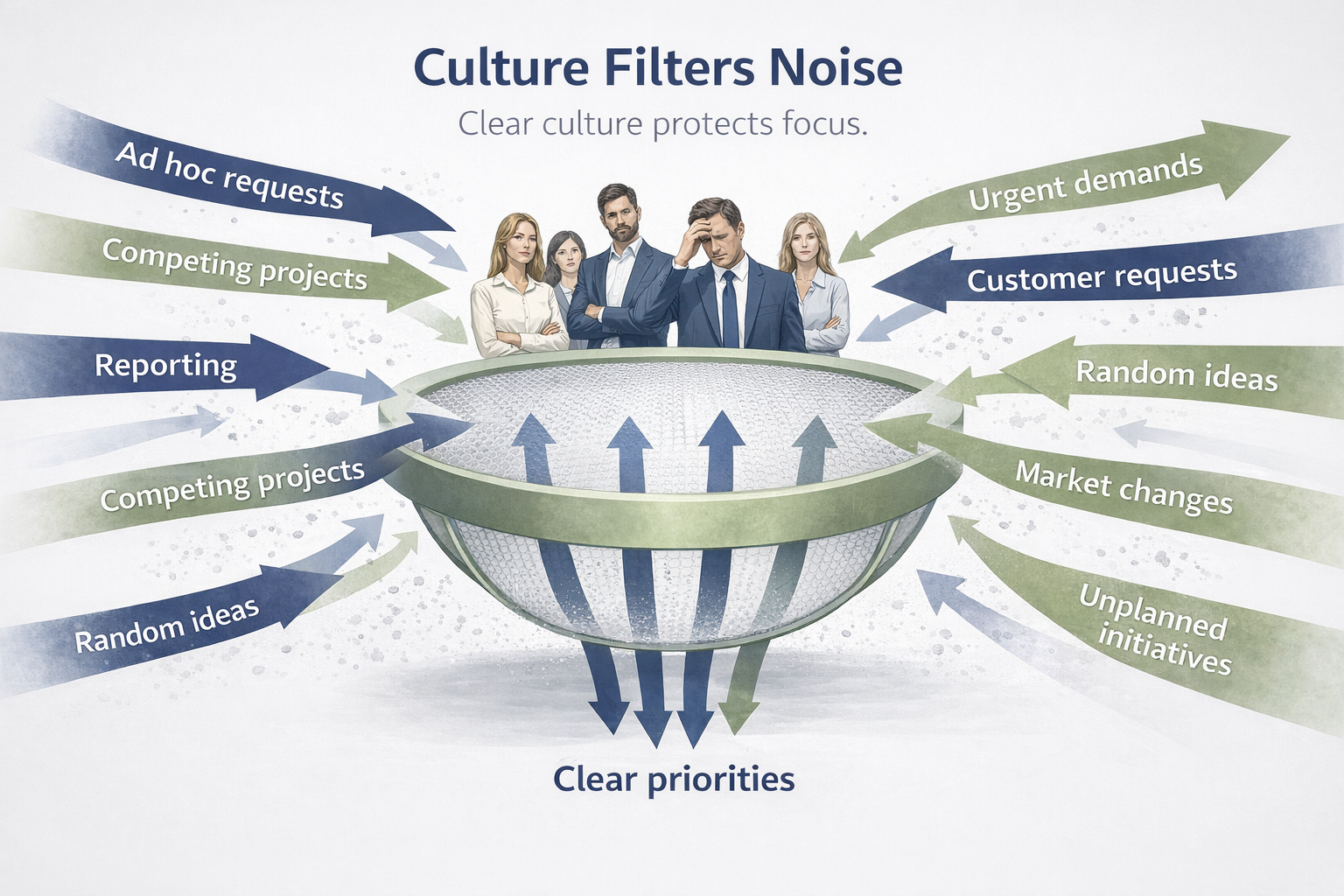
Organisations today face a constant stream of demands. Customers ask for improvements. Markets change quickly. Competitors launch new ideas. Technology introduces new tools. Leaders must respond to many signals every day.
Many organisations try to respond to all of these signals at once. New initiatives appear. Extra meetings are scheduled. Additional projects are added to already full workloads.
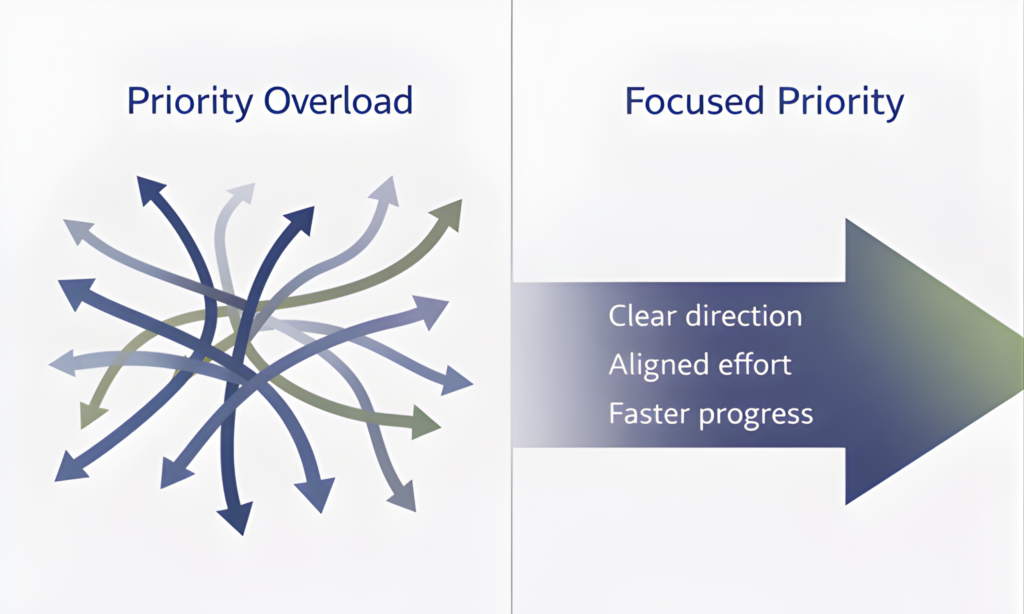
Over time, this creates priority overload.
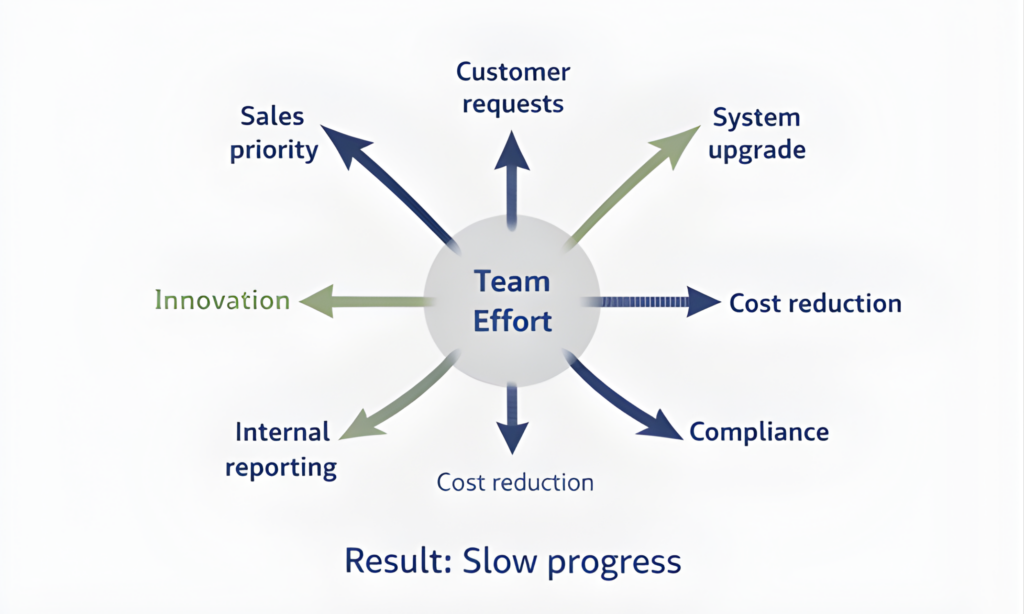
Priority overload occurs when teams carry too many responsibilities at the same time. Work increases, but progress slows. Employees feel busy, yet results improve only slightly.
In such environments, the organisation begins to lose focus.
This is where culture becomes extremely important. Strong organisational culture helps teams recognise what matters most. It helps leaders decide which signals deserve attention and which signals should be ignored.
In simple terms, culture filters noise.
When culture filters noise effectively, the organisation can maintain clarity even in a complex environment. Teams remain focused on the priorities that support long-term success.
Understanding how culture filters noise allows leaders to protect their organisations from the growing pressure of priority overload.
Modern organisations often face more opportunities than ever before. Technology allows companies to launch new products quickly. Global markets provide access to new customers. Information travels rapidly across the world.
Each new opportunity may appear attractive. Leaders often feel pressure to act quickly to remain competitive.
As a result, organisations begin to add more projects.
One team may launch a new customer platform. Another team begins a digital transformation programme. A third team introduces a new reporting system.
Soon, the organisation will be managing many initiatives simultaneously.
At first, this seems productive. However, after some time, signs of strain appear. Employees feel overwhelmed. Meetings multiply. Important decisions take longer to make.
Teams begin switching between tasks throughout the day. Instead of focusing on one meaningful objective, people try to move many projects forward at the same time.
This situation creates priority overload.
Priority overload does not happen because people lack commitment. It happens because the organisation tries to do too many things at once.
Without a clear filter for decisions, every request begins to look equally important.
This is where culture plays a powerful role.
Culture represents the shared beliefs and behaviours that guide how people work together.
It shapes how employees make decisions. It influences how leaders respond to challenges. It defines what the organisation values most.
When culture filters noise, employees can quickly recognise which requests support the organisation’s purpose and which distract from it.
For example, an organisation may value long-term customer trust. When a new idea appears that could damage that trust, employees immediately recognise the risk.
Another organisation may prioritise operational excellence. In this environment, teams quickly reject activities that create unnecessary complexity.
In both cases, culture acts like a filter.
Noise represents the constant stream of demands, requests, and distractions that appear during daily work. Culture helps teams separate meaningful signals from unnecessary activity.
Without this filter, every new request appears urgent. With a clear cultural filter, teams understand where to focus their effort.
Many organisations recognise the importance of culture. They may publish value statements or describe their mission in official documents. Yet culture does not influence behaviour unless it appears in daily decision-making.
Several challenges prevent organisations from using culture as an effective filter.
First, priorities may change frequently. If leaders introduce new initiatives every few weeks, employees cannot rely on a stable direction.
Second, leadership behaviour may contradict stated values. When leaders reward activity instead of meaningful progress, teams focus on being busy rather than productive.
Third, communication may remain unclear. Employees may hear about many goals but struggle to understand which goals truly matter.
When these conditions exist, culture cannot filter noise effectively. Employees respond by trying to satisfy every request. Over time, priority overload grows stronger.
When culture filters noise successfully, employees share a clear understanding of what the organisation stands for.
This understanding does not come only from written values. It comes from repeated actions. Leaders demonstrate cultural priorities through their decisions. They explain why certain projects matter more than others. Teams observe these decisions and begin to recognise patterns.
Over time, employees develop a strong sense of direction. When new requests appear, they can evaluate those requests quickly.
Does this task support our purpose?
Will this project help us serve customers better?
Does this initiative align with our strategy?
If the answer is yes, the work moves forward. If the answer is unclear, the request may be postponed. In this way, culture quietly protects the organisation from unnecessary activity.
Focus represents one of the most valuable resources within any organisation.
When teams concentrate on a small number of priorities, progress becomes visible. Projects move forward steadily. Employees experience a sense of achievement.
However, when focus disappears, work becomes fragmented. Priority overload destroys focus by introducing too many competing responsibilities.
Culture protects focus by reminding teams what truly matters.
For example, a company may value customer experience above rapid expansion. In such an environment, teams may reject projects that distract from improving service quality.
Another organisation may prioritise innovation. Employees may accept experiments while declining routine work that limits creativity.
In both cases, culture provides guidance. Instead of debating every new request, teams rely on shared principles. These principles act as guardrails that maintain focus.
Leadership behaviour remains the most powerful force shaping organisational culture.
Employees observe how leaders react to challenges. They notice which actions receive recognition and which actions receive criticism. When leaders consistently protect the organisation’s priorities, culture becomes strong.
For example, a leader may decline a promising opportunity because the organisation is already committed to other priorities. Although the opportunity appears attractive, the leader understands that adding more work would weaken progress.
This decision sends a clear signal to the organisation: focus matters. Employees learn that not every opportunity should be pursued.
Through repeated actions, leaders demonstrate how culture filters noise.
Operating rhythm refers to the structured way leaders review progress and reinforce priorities. Regular leadership discussions help organisations maintain clarity.
Weekly meetings may focus on operational results. Monthly sessions may review strategic initiatives. Quarterly reviews may examine a broader direction.
During these discussions, leaders can ask important questions.
Which priorities remain most important?
Which projects support those priorities?
Are there activities that may be distracting the organisation?
These conversations allow leaders to remove unnecessary work before priority overload becomes severe. Operating rhythm, therefore, strengthens the cultural filter. It ensures that strategy, culture, and execution remain aligned.
When culture filters noise successfully, organisations experience several important benefits.
Decision-making becomes faster because teams understand the organisation’s direction.
Employees feel more confident about their work because expectations remain clear.
Meetings become more purposeful because discussions focus on meaningful priorities.
Projects move forward more quickly because attention is concentrated.
Perhaps most importantly, employees experience less stress.
When people understand what truly matters, they can direct their efforts with greater confidence. Clarity reduces confusion. And when confusion decreases, performance improves.
Organisations rarely fail because they lack ideas. More often, they struggle because too many ideas compete for attention at the same time.
Priority overload weakens focus and slows progress.
Culture provides the solution.
When culture filters noise, teams recognise which opportunities deserve attention and which distractions should be ignored. This clarity allows organisations to protect their energy and concentrate on meaningful work.
Leaders who strengthen cultural alignment therefore create organisations that remain focused even in complex environments.
In a world filled with constant signals, culture becomes the filter that protects progress.
If your organisation often feels busy but progress seems slower than expected, it may be worth examining how priorities are currently filtered.
Sometimes a short leadership conversation about focus, culture, and decision-making can reveal simple adjustments that restore clarity and momentum.