
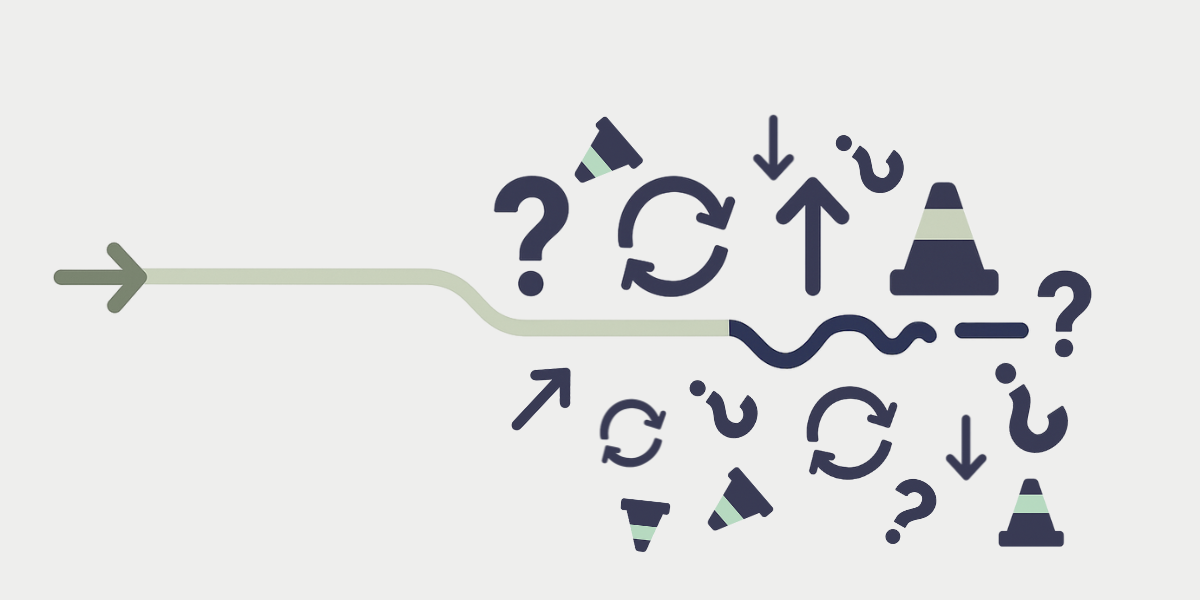
Think about how every new initiative starts. The first month always feels good. Teams are energised. Meetings feel sharp. Everyone seems aligned. You look at the organisation and think, “Yes, this is what we meant all along.”
Then, almost quietly, something changes.
By week five, that early pulse softens. Tasks slide by a few days. Decisions take longer. Conversations get repeated. You start hearing phrases like, “I just wanted to check with you first,” or “Let us move this to next week.” Nothing dramatic breaks, but everything feels heavier.
That slow, subtle weakening is execution drift. We call it a fade curve because that is exactly what it feels like:
And if you do not catch it early, it becomes the organisation’s new normal.
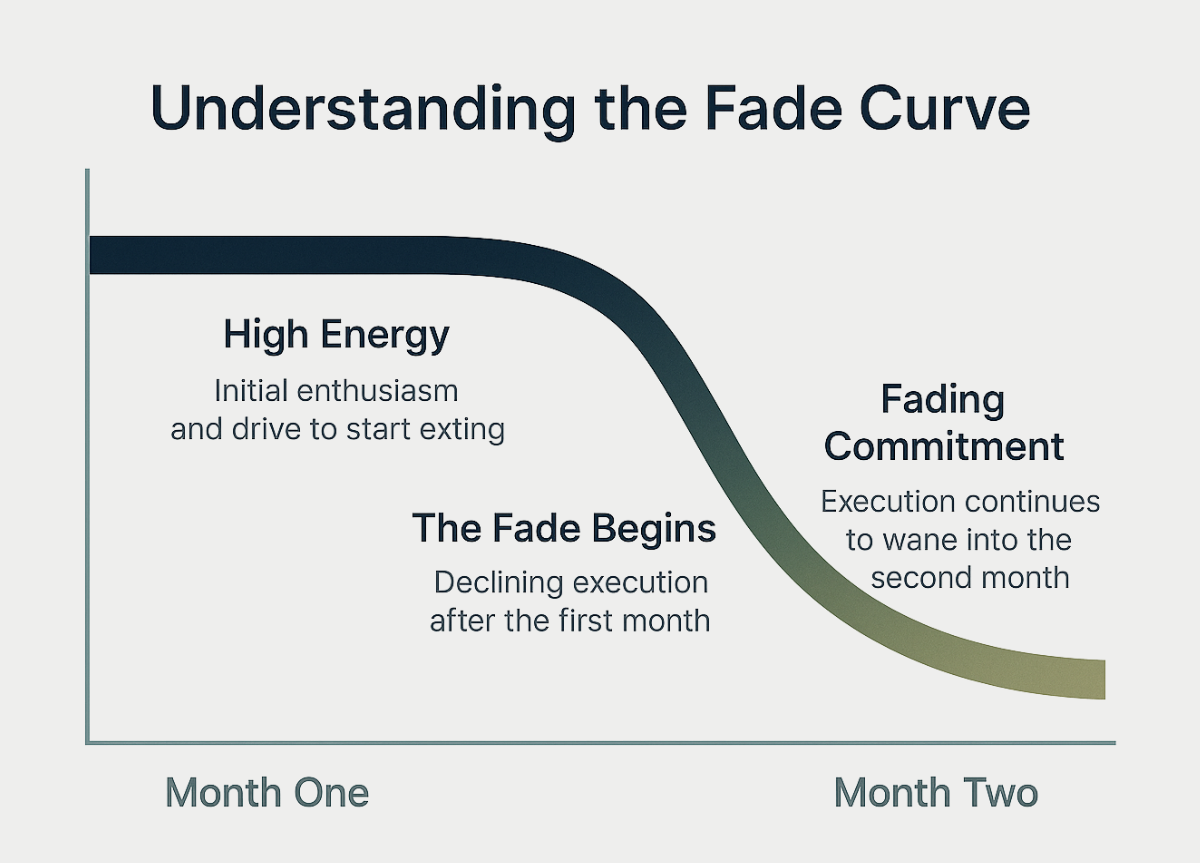
This drift does not happen because people are unmotivated. It is because the system was not designed to carry out execution beyond the first month. Let us talk through why this happens, how you can spot it early, and what you can do to prevent it.
Month one runs on emotion. Month two runs on the system.
In month one, everyone is unusually well-behaved. People attend meetings. They update trackers and communicate thoroughly. They act as if the organisation has already changed. But that behaviour is running on emotional fuel: excitement, novelty, clarity, momentum. Unfortunately, emotional fuel has a short shelf life.
By month two, the organisation returns to its true operational rhythm. If that rhythm is unclear or slow, or dependent on a handful of leaders, execution drift starts immediately.
Month one makes you think the system is working. Month two tells you the truth.
Drift rarely begins with obvious problems. It starts with invisible ones:
Each moment is tiny, but together they form the fade curve. This is not a motivation issue. It is a signal that clarity is waning, and the structure is not strong enough to keep momentum.
This drift happens in almost every organisation. It is not random; it is a pattern. The same five roots show up everywhere.
During month one, everyone assumes they know who decides what. By month two, those assumptions start colliding.
People are unsure about:
When authority is unclear, everything slows down.
Month one usually has one clear goal. Month two suddenly has five.
Fires pop up. Opportunities creep in. Leaders say “quick favour” too often. When everything matters, nothing matters, and execution drifts.
A strong strategy sitting on a weak rhythm always collapses. Most organisations have rhythms suited for maintenance, not momentum.
Month one runs on energy. Month two runs into reality.
Every initiative hits surprises, delays, and other challenges. If the system cannot adjust, it snaps back. That is when drift becomes inevitable.
Culture is the organisation’s gravity.
Month one shows intention. Month two shows culture. The third month shows whether the system supports the culture or collapses under it.
Most businesses underestimate the power of culture defaults.
CEOs sense drift before any dashboard does. The signals are incredibly consistent:
3.1. More escalations than usual: when work starts flowing upward again, drift is gaining speed.
3.2. Meetings drift from decisions to discussions: the tone shifts from movement to analysis. That is the first audible clue.
3.3. Teams are busy, but progress feels thin: this is the most painful sign: energy is high, output is low.
These are not performance problems. They are structural cracks that are widening.
When execution slows down, it is tempting to respond with pressure: more urgency, more accountability, more reminders. But execution drift does not respond to pressure.
It responds to clarity.
When the system is clear and predictable, behaviour becomes consistent. When behaviour becomes consistent, execution becomes reliable, and the fade curve flattens.
If you want execution to hold beyond month one, these three anchors are essential.
Spell them out. Do not rely on “everyone knows.”
The following four levels usually unlock speed:
This single change removes most of the drift.
The rhythm must match the weight of your strategy. That means:
Rhythm creates momentum that emotion cannot.
Visibility changes behaviour. When people can see progress, blockers, owners, and timings, drift loses its grip. Visibility is accountability without pressure.
CEOs sit at the crossroads of strategy, culture, and execution.
When execution drifts, all three push back at once:
CEOs call it pressure. It is actually early detection. You are not imagining it.
You are sensing the fade curve long before anyone else notices.
If you intervene early, drift can be reversed quickly.
The reset looks like this:
This is not about working harder. It is about strengthening the scaffolding that holds momentum in place.
Execution does not break after month one because people lose motivation. Execution breaks because the system loses tension. The organisations that sustain momentum understand something simple:
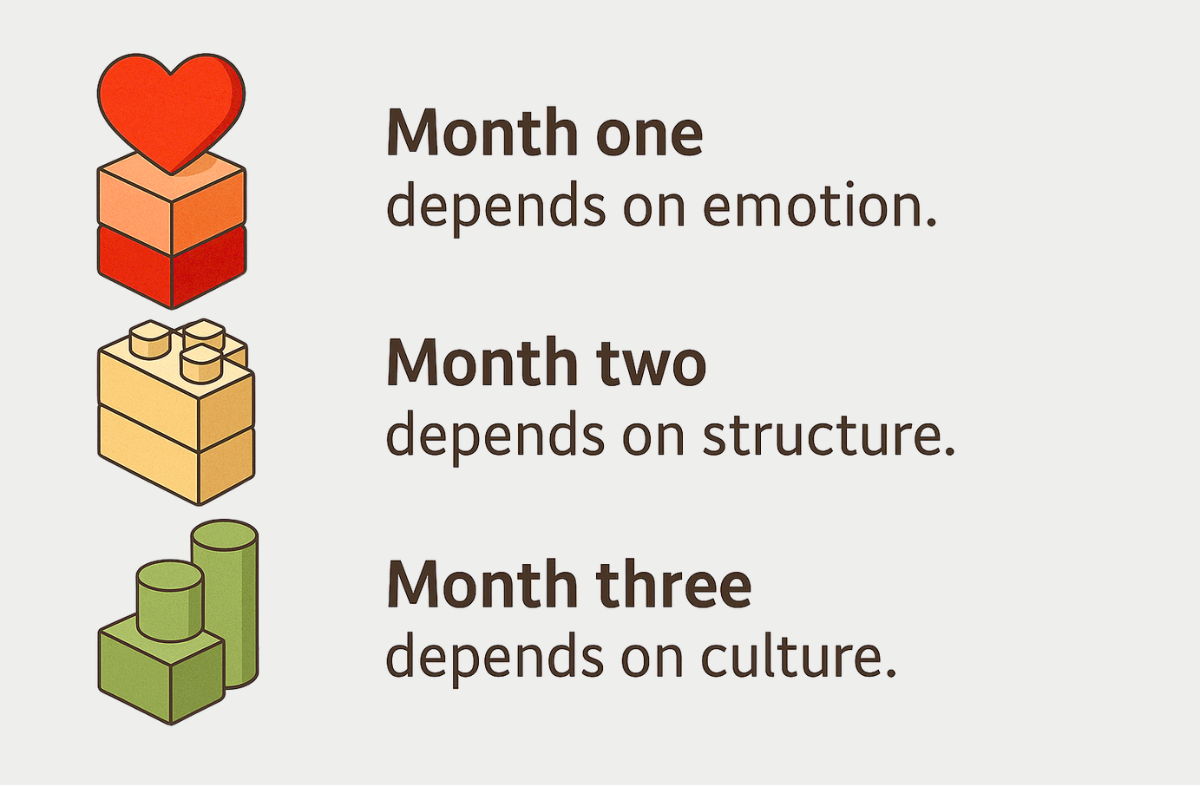
When the design is solid, execution compounds instead of fading.
If you are starting to feel the fade curve inside your own organisation, slower decisions, growing hostility, priorities drifting, it is not a leadership flaw. It is a system design gap.
Let us close that gap.
Clear answers, clear direction, and the clarity to keep your strategy moving long after month one.